




As a parent navigating autism therapy, you may wonder how to find a qualified in‑home ABA therapist for your child and what the first appointment will look like. Simply put, you’ll want a trusted professional who understands your child’s behaviors, strengths, and needs, and works with your family as a team. A qualified therapist will assess your child’s unique needs, build a personalized treatment plan, and help you feel confident participating in the therapy journey. This guide breaks it all down in a clear, practical way.
How Do I Find a Qualified In‑Home ABA Therapist for My Child with Autism?
Finding the right in-home ABA therapist doesn’t have to be overwhelming. Here are practical steps you can take to ensure you find the best professional to help your child thrive in the comfort of your home:
1. Look for Proper Credentials
A qualified in‑home ABA therapist should be credentialed and trained in Applied Behavior Analysis. At Magical Moments ABA, licensed Board‑Certified Behavior Analysts (BCBAs) and skilled Registered Behavior Technicians (RBTs) work together to create a customized plan for each child.
2. Ask Local Parent Groups or Providers
Reach out to parent support groups or special needs communities in your area, including those in neighborhoods, for referrals. Hearing real parents’ experiences helps you find someone who truly fits your child’s style.
3. Evaluate Compatibility
Therapy should feel comfortable and supportive for your child and family. Look for a therapist who listens, adapts to your feedback, and explains ABA techniques clearly. At Magical Moments ABA, the approach is relaxed, fun, and child‑led, designed to make learning enjoyable rather than stressful.
4. Confirm Insurance & Availability
Magical Moments ABA accepts most insurance plans and often has no waitlist, which means your child can start therapy quickly without long delays.
What Should I Expect During an Initial Consultation with an In‑Home ABA Therapist?
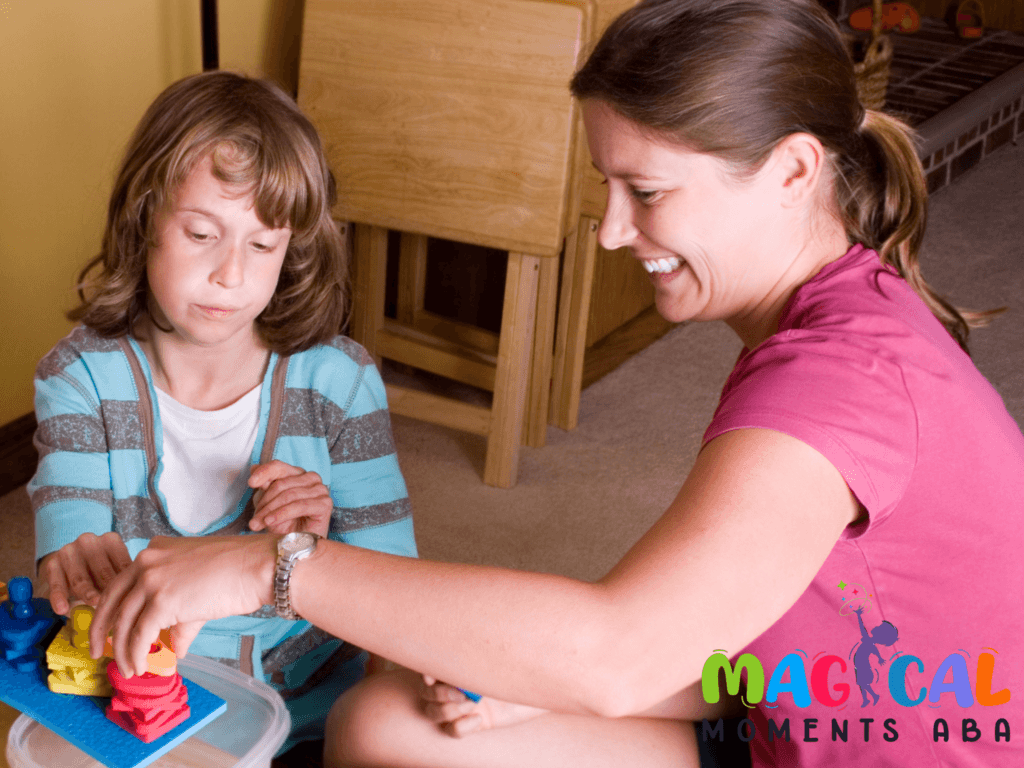
The first session sets the tone for your child’s ABA therapy journey. During this time, the therapist will assess your child’s unique needs and provide a clear plan for success. In-home ABA therapy offers:
Initial Conversation & Family Interview
The therapist begins by getting to know your child and family, asking about developmental history, strengths, challenges, and your goals. This helps build a custom therapy plan together.
Behavioral Observation
During the meeting, the therapist will observe your child in their natural environment. This gives insight into how they communicate, play, and respond to prompts, all without requiring formal tests or unfamiliar settings.
Goal Setting
Together, you will discuss specific therapy goals. These may include communication skills, social engagement, emotional regulation, or adaptive life skills. The plan will be individualized, not one‑size‑fits‑all.
Natural, Comfortable Environment
At Magical Moments ABA, therapy doesn’t feel like “work.” Their team focuses on environments where your child feels relaxed and engaged, whether at home, during daily routines, or during playtime.
Parent Questions
This is your time to ask questions: How do they track progress? What will the daily sessions look like? How can you support your child between appointments?
A good therapist welcomes these questions and treats your family as a partner in the process.
How Do In‑Home ABA Therapists Work With Families?
ABA in-home therapy is most effective when families are involved. Parents and caregivers can reinforce the skills taught during therapy, helping the child apply them consistently:
1. Collaborative Treatment Planning
Your insight about your child helps shape every step of the therapy plan. Magical Moments ABA emphasizes working with your input and involvement; together, we make the perfect team.
2. Parent Training & Coaching
Therapists don’t work in isolation; they teach you strategies you can use during everyday moments. This means you’ll learn how and why certain approaches work, so progress continues even outside sessions.
3. Ongoing Communication
Expect regular updates about progress and challenges. Many families receive reports and coaching sessions that help them feel confident and involved every step of the way.
4. Building Skills Together
Whether it’s reducing challenging behaviors or improving communication, your therapist will support you, offering guidance rooted in evidence‑based ABA practice tailored to your child’s strengths.
A Real-Life Moment in Indianapolis
When the Garcia family in Lawrence, Indiana, brought in an in-home ABA therapist from Magical Moments ABA, they weren’t sure what to expect. However, the therapist guided them every step of the way, providing tools and strategies that made a lasting impact on their child’s development.
From the very first session, the therapist took time to learn Sofia’s favorite games and interests, turning therapy into play and comfort. Slowly, Sofia began engaging first with her therapist, then with her parents during shared activities. The therapist walked the Garcia family through each step, helping them celebrate small wins on bathroom routines, eye contact, and sharing toys.
Six months later, at a park in Broad Ripple, Sofia was confidently asking another child to play something her mom never expected so soon. The therapist had helped them set achievable goals, maintain consistency, and make learning feel joyful.
What Happens After the First Session?
After the initial consultation:
Customized Treatment Plan
Your therapist crafts a personalized ABA plan based on what they learned, including goals, behavior strategies, and session frequency.
Scheduling Regular Sessions
Most children benefit from multiple weekly sessions to maintain consistency and build progress.
Data‑Driven Progress Monitoring
Your therapist will track your child’s achievements and challenges to adjust therapy as needed. Good ABA therapy is always evolving as your child grows.
Family Support
Expect ongoing parent coaching, progress updates, and opportunities for questions. Your involvement accelerates your child’s success.
Benefits of In‑Home ABA Therapy
In‑home ABA therapy provides unique advantages:
- Comfortable environment: Children learn better when they feel safe and relaxed in familiar surroundings.
- Natural learning opportunities: Everyday routines become teaching moments.
- Family involvement: Parents observe therapy firsthand and consistently use strategies.
- Flexible scheduling: Sessions bend to suit your home life, mornings, evenings, or weekends.
Common Concerns Parents Have
Here are some typical questions parents ask before trying in‑home ABA:
“Will therapy disrupt our daily routine?”
Not usually. The idea is to integrate ABA into your family’s natural routines, making learning feel organic and smooth.
“Is my child old enough for ABA?”
Children of all ages can benefit. In‑home therapy adapts to each child’s developmental level and needs.
“Do parents need to be trained?”
Yes, parent coaching is a core part of successful ABA therapy. You’ll learn how to support progress at home and in community settings.
About Magical Moments ABA
At Magical Moments ABA, the mission is simple but powerful: to help children conquer challenges, master new skills, and accelerate toward independence in a way that feels natural, fun, and accessible. With a relaxed, child‑led approach and therapy designed to make kids feel Happy, Relaxed, and Engaged (HRE), sessions don’t feel like work; they feel like growth. With Magical Moments, ABA builds personalized therapy plans rooted in compassion, collaboration, and real progress.
Ready for a free consultation? Contact Magical Moments ABA today to start shaping your child’s tomorrow.
FAQ: People Also Ask
How long does ABA therapy take to show results?
ABA therapy often shows small improvements within a few months, but meaningful gains usually build over time as consistent skills develop.
Can ABA therapy happen outside the home?
Yes, in addition to in‑home sessions, some programs also support school or community settings. Magical Moments ABA offers naturalistic environments tailored to your child.
Is ABA therapy covered by insurance?
Many insurance plans cover ABA therapy. Check with your provider. Magical Moments ABA accepts most insurances and can help with benefits questions.
How do I prepare for the first session?
Have your child’s developmental history ready, list your goals and questions, and plan for a relaxed space where your child feels comfortable.in-home ABA therapist