



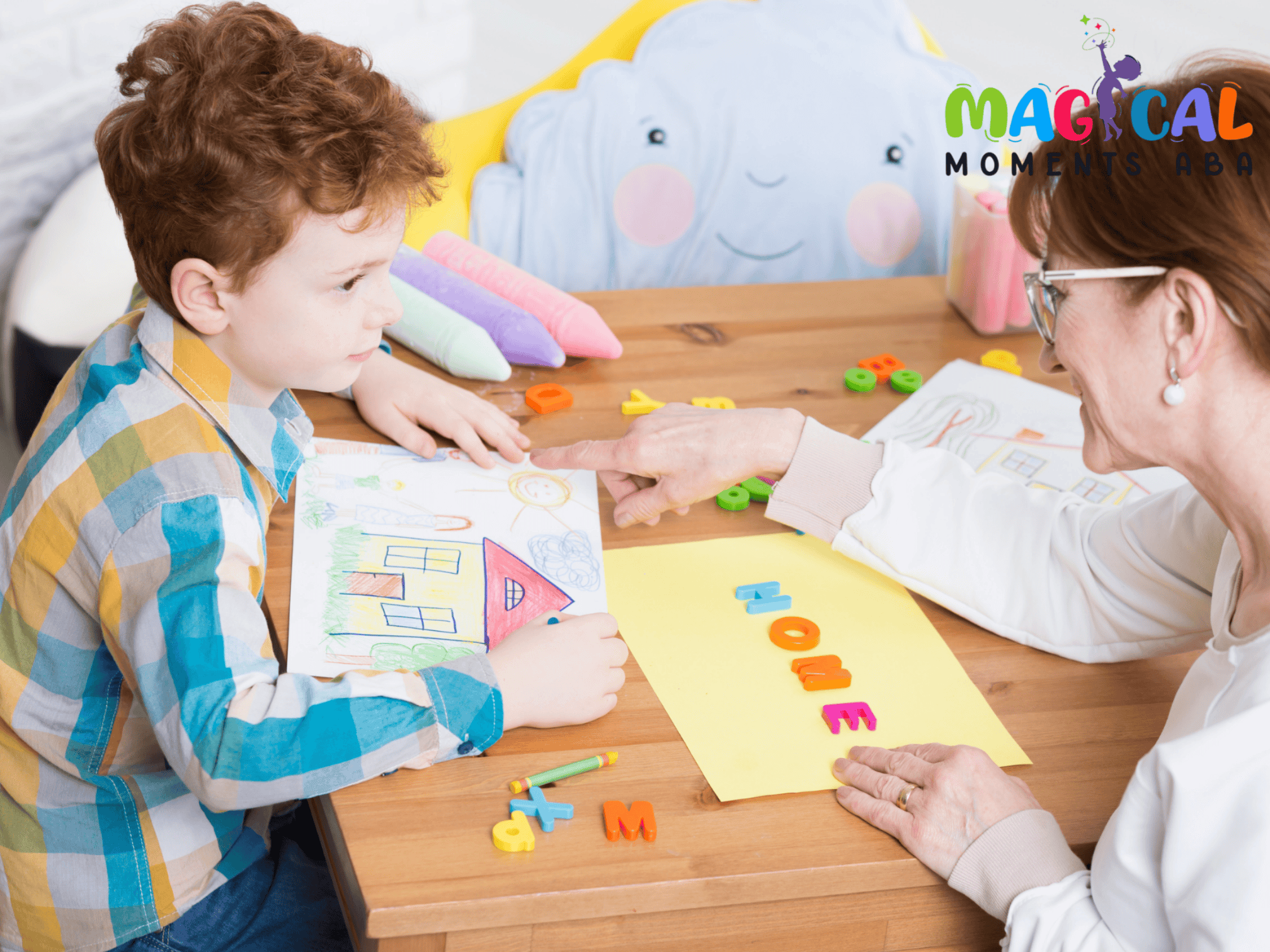
When it comes to supporting children with autism, in-home ABA therapy is a personalized approach that allows therapists to work with children in their own environment. In-home therapy offers distinct advantages, helping children thrive by focusing on real-world settings and routines. Here’s how a therapist can make a difference and how it compares to other types of therapy, such as center-based programs.
How Does an In-Home ABA Therapist Help Children with Autism in Their Own Environment?
An in-home ABA therapist works with children within the comfort of their own home, which can have a significant impact on their learning and development. The familiarity of home allows the therapist to address challenges children face in their natural environment, making the therapy more effective and relatable.
Key Benefits:
- Personalized Therapy: ABA In-home therapy is tailored specifically to the child’s needs, routines, and home environment. For example, tasks like feeding, dressing, and interacting with family members are incorporated into therapy, allowing the child to generalize skills in real-life situations.
- Minimized Distractions: Children with autism can often be overstimulated by unfamiliar environments. Therapy at home reduces these distractions, helping the child focus and engage more effectively in learning activities.
- Family Involvement: In-home therapy allows therapists to work closely with parents, helping them implement strategies and techniques at home to ensure consistency and progress.
- Natural Setting Integration: Working at home makes it easier to incorporate daily routines into therapy. For example, a child might practice communication skills while helping to set the dinner table or engage in social interactions during family time.
Example: Take Sarah, a 4-year-old living in Marietta, Georgia. Sarah was working on social communication and daily living skills, like brushing her teeth. An in-home therapist helped her practice these tasks during real family interactions. Over time, Sarah was able to generalize these skills and show more confidence in social settings.
Key Differences Between In-Home ABA Therapy and Center-Based ABA Therapy
While both in-home and center-based therapies aim to support children with autism, they differ in their approach and the settings in which therapy takes place. Here’s a breakdown of the key differences:
In-Home ABA Therapy:
- Home Environment: Therapy is provided in the child’s own home, making it easier to integrate therapy into daily life.
- Flexibility: In-home ABA therapy is often more flexible, with sessions that can be scheduled to fit the family’s routine.
- Family Engagement: Parents and family members can be directly involved in therapy, helping reinforce skills outside of sessions.
- Individualized Attention: In-home therapy can be more tailored, as therapists can adapt sessions to specific home-related challenges.
Center-Based ABA Therapy:
- Controlled Environment: Therapy takes place in a clinical setting, offering fewer distractions and a more structured environment.
- Socialization Opportunities: Centers offer opportunities for children to interact with peers, which can benefit social skills development.
- Specialized Equipment and Resources: Centers may have more specialized resources and equipment that are difficult to replicate in a home setting.
- Limited Family Involvement: While therapy is highly structured, there may be fewer opportunities for family members to participate directly in the sessions.
Example: In a center-based setting, children like Ethan living in downtown Atlanta may benefit from structured peer socialization. However, if Ethan struggles with transitions at home, an in-home therapist can work directly with his family to create a plan that supports transitions in a familiar environment.
How to Determine if an In-Home ABA Therapist Is the Right Fit for My Child’s Needs
Choosing the right therapy approach for your child is a critical decision, and several factors should be considered when deciding whether in-home therapy is the right fit.
Questions to Consider:
- Is My Child More Comfortable at Home? Some children with autism thrive in the comfort of their own home, where they feel safe and less overwhelmed. If your child experiences anxiety in unfamiliar environments, in-home ABA therapy services near me may be the best choice.
- Can I Be Involved in the Therapy? If you’re looking to be more involved in your child’s therapy and want to learn how to reinforce techniques at home, in-home therapy offers a more integrated experience.
- What Are My Scheduling Needs? In-home therapy offers flexible scheduling options that may better suit families with busy schedules or unique time constraints.
- Does My Child Need More One-on-One Attention? If your child requires more individualized support, in-home therapy ensures that the therapist’s attention is focused entirely on your child’s needs.
In Summary
In-home ABA therapy provides a unique opportunity for children with autism to receive personalized support in their own environment. By addressing challenges and focusing on real-life routines, in-home therapy helps children make meaningful progress in both functional skills and social interactions. Whether you choose in-home or center-based therapy depends on your child’s specific needs, family dynamics, and comfort level.
About Magical Moments ABA:
Magical Moments ABA provides personalized, compassionate in-home therapy for children with autism. Our goal is to create a fun, engaging, and nurturing environment where your child can thrive. We serve Marietta, Georgia, and surrounding communities, offering a range of services designed to support children and families.
Contact Magical Moments ABA today for a consultation, and let us help your child achieve success in their natural environment.
FAQ Section
People Also Ask:
- What is the difference between in-home and center-based ABA therapy for autism?
In-home therapy takes place in the child’s home and is more individualized, allowing real-world practice, while center-based therapy occurs in a clinical setting and offers more structured socialization and specialized equipment. - Can an in-home ABA therapist help with school-related challenges?
Yes, in-home ABA therapists can work with children on skills that support school, such as following instructions, managing transitions, and socializing with peers. - How long does in-home ABA therapy typically last?
The length of therapy varies depending on the child’s needs and goals. Sessions generally last 1-2 hours and can be scheduled weekly or multiple times a week.