




Both Applied Behavior Analysis (ABA) and Occupational Therapy (OT) improve communication in nonverbal toddlers, but they target different underlying needs. ABA uses positive reinforcement to teach children how to effectively express wants and needs, while OT addresses the sensory processing and motor planning required for physical speech. For many early learners, combining these two complementary therapies yields the most profound developmental progress.
Navigating early intervention recommendations can be overwhelming when your toddler is nonverbal. You want to understand their needs and help them connect with the world. Below, we break down the exact differences between these two therapies and explain how a specialized approach helps your child find their voice.
Understanding the Core Differences in Treatment
Occupational Therapy is rooted in biology and sensory integration. An occupational therapist looks at the physical barriers preventing a child from communicating, such as strengthening oral-motor muscles for speech or helping a child reach a regulated sensory state to use an Alternative and Augmentative Communication (AAC) device.
ABA therapy is rooted in learning and behavior, focusing on teaching a child why communication is valuable. When parents begin searching for Hayne Applied Behavior Analysis solutions, they are usually looking to reduce frustration-based behaviors, like crying, and replace them with functional communication. ABA teaches that using a word, sign, or picture card results in a positive outcome, giving the child the power to navigate their environment.
Applying Our Naturalistic, Play-Based Approach
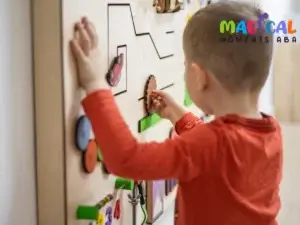
Some parents hesitate about behavioral interventions, picturing rigid table-drill methods where a child sits quietly with flashcards. We believe in a fundamentally different philosophy. Our proprietary approach utilizes naturalistic, play-based ABA therapy to ensure the experience is empowering, not stressful.
We know that early learners, ages 2 to 5, learn best when having fun. We teach critical skills through play, family routines, and real-life activities. If we want to teach a child to request “open,” we practice with a tightly sealed box of their favorite toys, not a worksheet. When exploring Applied Behavior Analysis in Hayne, NC, finding an environment where therapy feels natural and enjoyable is vital to sustaining your child’s engagement and progress.
Building Independence Through Daily Family Routines
A major advantage of our approach is that services are delivered directly in the home, school, or community settings. For families in Leland and Belville, having a trained professional provide Applied Behavior Analysis in Hayne in the home means children practice skills exactly where they are used every day, eliminating the need to “generalize” a skill learned in a clinic.
We focus heavily on functional independence. By embedding therapy into daily life, communication becomes a natural habit. We focus on practical daily skills like:
- Requesting Needs: Teaching a toddler how to ask for items during snack time instead of crying.
- Self-Care: Helping them begin to dress independently in the morning.
- Independent Play: Building the focus to happily play alone while a parent cooks dinner.
Bridging the Gap: Collaboration for Classroom Success
As your toddler grows, transitioning to an educational setting becomes a priority. We actively collaborate with local systems, including New Hanover County Schools, to support classroom success. Consistent Hayne, NC, Applied Behavior Analysis support means having a team that actively advocates for your child’s educational needs outside the home.
Our state-licensed Board Certified Behavior Analysts (BCBAs) frequently attend IEP meetings and coordinate directly with teachers. We provide tailored support for classroom challenges, such as navigating complex transitions, staying seated, and safely asking teachers for help.
Your Child’s Dedicated Therapy Team
Every therapy plan begins with a gentle consultation and assessment, leading to personalized goal setting. Our programs are exclusively created and overseen by BCBAs, who observe sessions regularly to adjust programs based on real-time data.
Direct therapy is provided by compassionate Registered Behavior Technicians (RBTs) with consistent scheduling, typically 2 to 4 sessions per week. We also empower the whole family. Parents receive ongoing coaching and feedback sessions, learning practical strategies to seamlessly support their child’s progress outside of therapy.
Starting Your Journey Without Waitlists
When your child needs communication support, waiting six months is unacceptable. Our team provides timely, accessible care across Castle Hayne, Wilmington, and nearby communities within about a 30-minute radius.
Families can usually start therapy within 2 to 3 weeks with no long waitlists. To let you focus entirely on your child’s development, our administrative team completely handles all insurance verification and prior authorization.
People Also Ask
Should my nonverbal toddler do both ABA and occupational therapy? In many cases, yes. The therapies are highly complementary. An occupational therapist helps a child develop the fine motor skills needed to point or use sign language, while an ABA therapist provides the positive reinforcement needed to encourage the child to use those communication tools consistently.
How long does it take for a nonverbal toddler to start communicating with ABA? Every child is unique, but with consistent, play-based early intervention, parents often see meaningful improvements in functional communication, such as increased eye contact, pointing, or vocal approximations, within the first few months.
Is in-home therapy better than clinic-based therapy for early learners? For toddlers, the home environment is where they feel safest. In-home therapy eliminates the stress of commuting and transitioning to a new environment, allowing the child to focus entirely on learning using their actual toys and daily routines.
Let’s Take the Next Step Together
At Magical Moments ABA, we believe in the power of personalized, compassionate care that prioritizes your child’s unique needs. We understand the frustration of generic treatment options, which is why we create an environment where therapy feels natural, enjoyable, and deeply engaging.
Our goal is to replace uncertainty with hope, ensuring your family feels supported and confident in your child’s progress. If you are ready to explore a holistic, play-based approach that truly honors your child’s personality, we are here to listen. Contact us today to schedule a consultation and take the first step toward meaningful growth.